IP65 vs IP67 vs IP68: What the Ratings Really Mean for Outdoor LED Lighting
TOPBEDA Lighting · Updated October 21, 2026
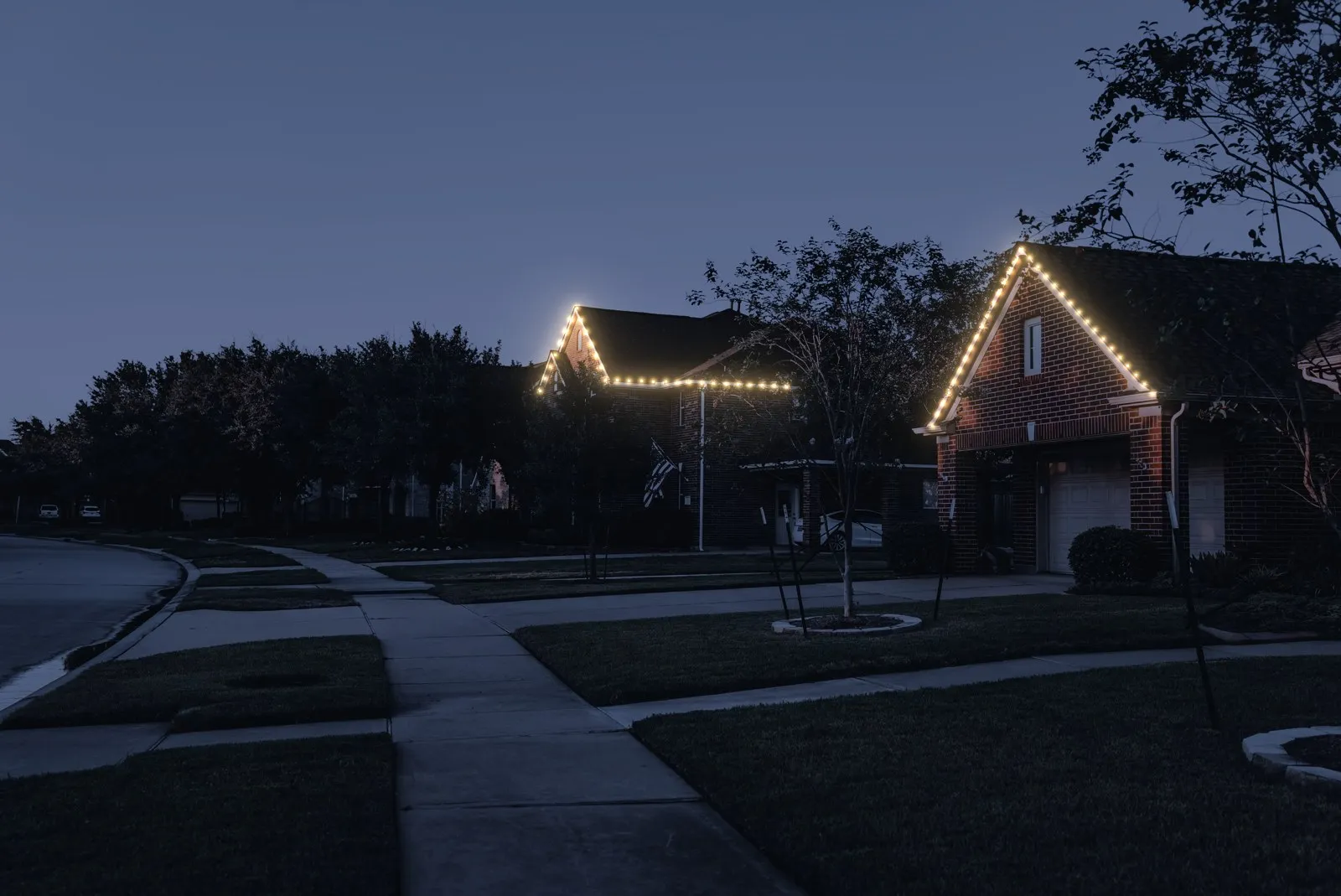 Visualization
"Waterproof" is one of the most used and least precise words in LED lighting. Buyers see IP65, IP67 and IP68 on datasheets, often assume a higher number is simply better, and specify IP68 for everything. That can lead to the wrong product or to paying for a test that does not match the real risk. This guide explains what each rating means under the international standard, and how to choose for eave lights, LED neon and strips.
What an IP rating is
IP stands for Ingress Protection. The codes are defined in IEC 60529 (published in Europe as EN 60529), "Degrees of protection provided by enclosures". An IP code has two digits:
- The first digit (0 to 6) is protection against solid objects and dust.
- The second digit (0 to 9) is protection against water.
An "X" in place of a digit (for example IPX7) means that part was not tested. An IP code says nothing about UV resistance, corrosion, temperature or impact; those need separate tests.
The first digit: 6 means dust-tight
All three ratings in this guide start with 6. Under IEC 60529, 6 = dust-tight: no ingress of dust after testing in a dust chamber. For outdoor lighting, dust-tight matters because fine dust plus moisture creates conductive paths and clouds diffusers.
The second digit: 5, 7 and 8 are different tests
| Second digit | Protection (IEC 60529) | Typical test |
|---|---|---|
| 4 | Splashing water from any direction | Oscillating tube or spray nozzle |
| 5 | Water jets from any direction | 6.3 mm nozzle, about 12.5 L/min, at about 2.5 to 3 m distance |
| 6 | Powerful water jets | 12.5 mm nozzle, about 100 L/min |
| 7 | Temporary immersion | Immersed so the lowest point is 1 m deep and the top at least 0.15 m deep, for 30 minutes |
| 8 | Continuous immersion | Conditions agreed between manufacturer and user, but more severe than 7 |
| 9 | High-pressure, high-temperature water jets | Close-range hot high-pressure spray (added to IEC 60529 later; IP69K is the related automotive code in ISO 20653) |
Why IP68 is not automatically "better" than IP65
The water digits are not a simple ladder. IEC 60529 states that a product rated 7 or 8 for immersion is not automatically compliant with 5 or 6 for jets unless it is also tested for them. Immersion is static pressure; jets are dynamic impact on seams and gaskets. That is why you see dual ratings such as IP65/IP68 or IP66/IP67 on serious outdoor products.
IP68 also has no single fixed test. The depth and duration must be agreed and must be tougher than IP67. "IP68" alone, without stated conditions, tells you less than it seems. When you evaluate a supplier, ask:
- What depth and duration was the IP68 test?
- Was the product also tested for jets (IPX5/IPX6)?
- Was it tested as a complete assembly, including connectors and end caps, or only the light body?
- Is there a test report from a third-party lab, and for which model?
We follow the same approach: for each model, ask us for the spec sheet and the current test report rather than relying on a label.
Comparison: IP65 vs IP67 vs IP68
| IP65 | IP67 | IP68 | |
|---|---|---|---|
| Dust | Dust-tight | Dust-tight | Dust-tight |
| Water | Water jets | Temporary immersion (1 m, 30 min) | Continuous immersion, conditions stated by manufacturer |
| Typical construction | Gasketed housing, coated or sleeved strip | Potted or fully sealed | Fully potted or sealed, sealed connectors |
| Typical uses | Covered outdoor areas, under eaves, signage protected from standing water | Exposed outdoor installs where temporary flooding or pooling is possible | Landscape, ground-level, areas with standing water, pools/fountains only if specifically rated |
Which rating to specify
Permanent eave lights
Eave lights sit on the roofline, exposed to driving rain, snow melt, sprinklers and pressure washers used on the house. Water does not normally pool around them, but water may run along the fascia and gutters can overflow. A rating that covers both jets and immersion (for example IP65 plus IP67 or IP68) on the complete light, with sealed connectors, is a sensible specification for long-term exposure. Our supplier can build eave lights to the highest waterproof grade on request; ask us for the spec sheet and report for the model you choose. See 24V permanent outdoor eave lights.
Flexible LED neon
Indoor décor neon does not need outdoor ratings. For outdoor signs and architectural outlines, specify a model rated for outdoor use, with sealed end caps and outdoor-rated connections. Silicone neon is often chosen outdoors for UV and temperature stability, but check the specific model. See flexible silicone neon strips.
LED strips and channels
Indoor cabinets, showcases and TV backlights are normally IP20 (uncoated). Kitchens near sinks may justify a coated strip; bathrooms and outdoor areas need higher ratings plus suitable power supplies.
The system is only as waterproof as its weakest point
A light can pass IP68 on its own and still fail in the field if connectors, cable entries or the power supply are not protected. Good practice:
- Check that connectors and end caps carry a rating suited to the location.
- Mount connectors facing down and use drip loops.
- Keep power supplies and controllers indoors or in rated enclosures.
- Do not cut and re-seal outdoor products in the field unless the manufacturer provides a tested method.
Beyond IP: other tests that matter outdoors
| Risk | Relevant test | Why it matters |
|---|---|---|
| Sunlight | UV aging | Yellowing or cracking of covers and silicone |
| Coastal air | Salt spray | Corrosion of contacts and screws |
| Heat and humidity | Damp heat / temperature cycling | Seal failure in tropical and desert climates |
| Electrical safety | Market certifications (e.g. UL/ETL, CE, CB) | Required for import and insurance |
If you are importing into the Middle East or Southeast Asia, temperature and humidity performance can be as important as the IP code. Ask us which tests are available for each model.
How to read a supplier datasheet
When comparing suppliers, look for these details next to the IP code:
- Exact code and scope: "IP67 (complete assembly incl. connectors)" is more useful than "waterproof".
- Test conditions for IP68: depth in meters and duration in hours.
- Report reference: lab name, report number and the model numbers covered.
- Operating temperature range: sealing materials behave differently in heat and cold.
- Power supply rating: an IP67 light with an indoor-only power supply is not an outdoor system.
If any of these are missing, ask before you order. A supplier with real test data can usually send it within a day.
Quick specification guide
| Location | Suggested minimum |
|---|---|
| Indoor, dry (cabinets, TV, showcases) | IP20 |
| Indoor, damp (kitchen splash zones) | Coated strip, e.g. IP54/IP65 |
| Outdoor, covered (under canopies) | IP65 |
| Outdoor, exposed roofline | IP65 plus IP67/IP68 on complete assembly |
| Ground level, possible standing water | IP67/IP68 with stated conditions |
These are general starting points, not a substitute for local codes or the manufacturer's installation instructions.
FAQ
Is IP68 always better than IP65?
Not automatically. IP68 tests continuous immersion; IP65 tests water jets. They are different tests, which is why some products are dual-rated, for example IP65/IP68.
Which standard defines IP ratings?
IEC 60529 (published in Europe as EN 60529). It defines protection provided by enclosures against solids and water.
What does IP68 depth and time mean?
IEC 60529 leaves IP68 conditions to agreement between manufacturer and user, but they must be more severe than IP67. A credible IP68 claim states the depth and duration tested.
Does an IP rating cover UV and salt spray?
No. IP ratings only cover ingress of solids and water. UV resistance, salt spray and temperature performance are separate tests.
Related products
Planning a project?
Send us your market, quantity and requirements. We reply within 1 business day with model recommendations and the spec sheet.